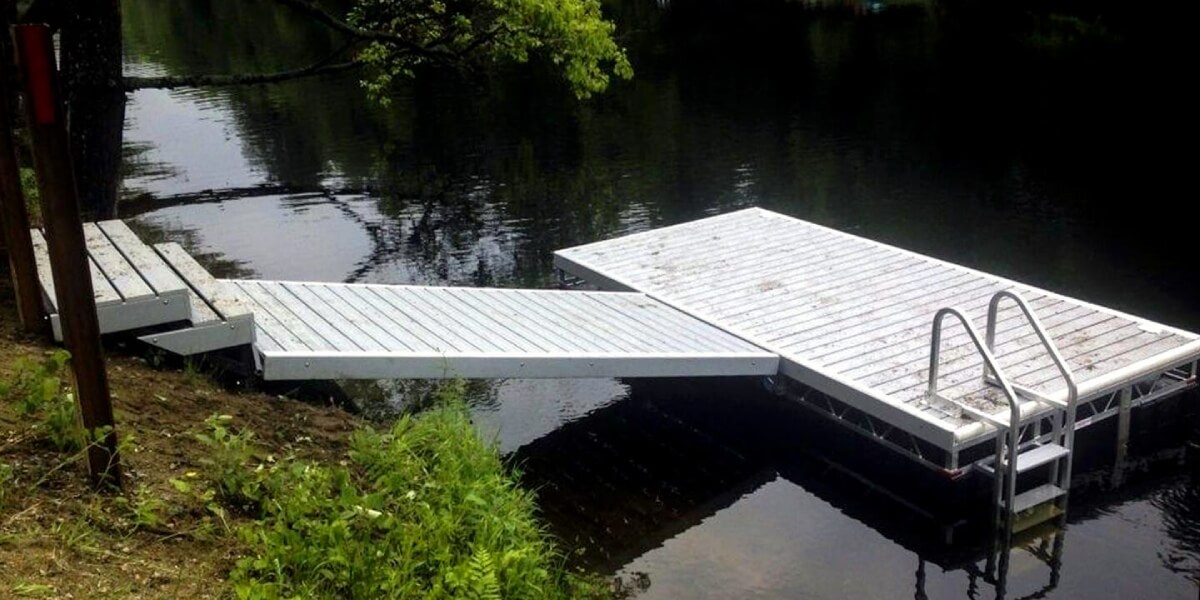
Why Aluminum Framing Outperforms Wood in Coastal Settings
Marine-grade aluminum dock construction outperforms traditional wood on the Gulf Coast because it doesn’t absorb moisture, doesn’t rot, and holds its structural dimensions through seasons of salt air, humidity, and UV exposure without requiring ongoing sealing or treatment. For residential and commercial dock construction alike, aluminum framing combined with composite decking delivers consistent structural performance and dramatically lower maintenance across the life of the structure.
Wood has a long track record in residential dock construction, and there’s nothing wrong with appreciating that history. The problem is that pressure-treated lumber and saltwater are not a great long-term match. Boards absorb moisture and swell. Framing members weaken as rot works its way in from the edges. Alignment shifts. Before long, what looked like a solid structure is developing soft spots and pulling fasteners. Any experienced marine contractor who has been doing this work for a while has seen it play out dozens of times.
Aluminum dock construction changes that equation in a meaningful way. A wood-free dock built on an aluminum frame doesn’t absorb moisture. It doesn’t swell, it doesn’t rot, and it holds its dimensions through season after season of sun, rain, and salt exposure. The structural consistency that aluminum brings to a dock is genuinely difficult to match with traditional lumber, no matter how well that lumber is treated or maintained.
For commercial dock construction, the strength-to-weight ratio is another thing that stands out. Aluminum carries serious load capacity without the bulk you get from heavier framing materials. That matters when a dock builder is designing a structure that needs to handle consistent boat traffic, equipment weight, or large groups moving across it. Lighter framing with strong load ratings means the overall design can stay clean and practical without sacrificing anything in terms of performance.
Material Comparison: Wood vs. Steel vs. Marine-Grade Aluminum
| Property | Pressure-Treated Wood | Steel | Marine-Grade Aluminum |
| Corrosion resistance | Moderate (treated) | Low (rusts) | High (oxide layer) |
| Moisture absorption | High (warps, rots) | Low (but corrodes) | None |
| Weight | Heavy | Very heavy | Light |
| Maintenance required | Annual sealing / staining | Regular coating | Minimal |
| Load capacity | Good initially, declines | High | High, consistent |
| Lifespan (Gulf Coast) | 5–15 years (major work) | Varies with coating | Decades with proper install |
Corrosion Resistance and Structural Integrity Explained
Corrosion is not a minor inconvenience in marine construction. It’s the thing that quietly compromises a structure over time, often in places you can’t easily see until something fails. Steel corrodes. Iron corrodes. Even treated wood is vulnerable to the slow, persistent damage that saltwater and humidity deliver year after year. Marine-grade aluminum is engineered specifically to resist that process, and when it’s paired with the right fasteners and protective coatings, it stays structurally sound in ways other materials simply don’t.
What that means practically is that the integrity of the framing stays intact beneath the deck surface, where you can’t always get a good look at it. In composite dock construction, the aluminum frame does real work supporting the decking system above it. When that frame is stable and free of hidden deterioration, the whole structure performs the way it was designed to. Marine construction services that pair aluminum framing with quality composite dock decking and marine decking systems are building something without obvious weak points waiting to become expensive problems.
In marina construction and dock and pier construction projects with heavy use, that consistent structural strength does more than protect the dock itself. Vessels tied to a compromised dock are at risk. Equipment secured to a warped or decaying framing system is at risk. The predictability that aluminum brings to a high-traffic waterfront structure is part of what makes it such a sensible choice for property owners who can’t afford to have their dock become unreliable in the middle of a busy season.
How Premium Materials Reduce Maintenance and Extend Lifespan
Ask waterfront property owners what they actually want from their dock and most of them give you some version of the same answer: they want to use it, not work on it. A wood dock demands a different relationship. Sealing, staining, replacing boards that have gone soft, pulling and resetting fasteners that have backed out over time. It’s a recurring commitment that adds up in both labor and cost. Most owners, once they realize there’s a better option, don’t go back.
Aluminum framing combined with composite dock construction cuts most of that maintenance load out of the picture. The aluminum doesn’t crack or split. It doesn’t need to be sealed or stained to stay structurally sound. The frame holds its original shape for years without particular attention, which keeps inspection simple and makes it easier for any dock builder or marine contractor to spot the rare issue before it develops into something bigger. That’s the kind of low-maintenance performance most residential dock construction clients are looking for when they decide to move away from wood.
The longevity piece matters for commercial dock construction clients in a different way. Fewer interruptions means consistent usability. When a dock is out of service for repairs or restoration, that has real operational consequences. An aluminum-framed dock built with quality marine decking systems doesn’t need to be taken offline nearly as often. Over the life of the structure, that reliability translates into measurable value, not just in reduced repair costs but in the predictable access the property depends on.
Whether it’s a new marine construction project starting from scratch or an upgrade away from aging lumber that has run its course, aluminum framing is a straightforward answer to a problem Gulf Coast property owners have been dealing with for a long time. Once you’ve seen the difference it makes over five or ten years of coastal conditions, it’s hard to argue for going back.
Frequently Asked Questions
Is aluminum strong enough for heavy boat traffic?
Yes, when the system is properly engineered and installed. Aluminum dock construction uses framing profiles sized specifically for the load demands of the project, whether that means a private residential dock or a high-traffic commercial dock construction setup. A qualified marine contractor will spec the right system for the expected use so there are no surprises once the structure is in the water.
Does aluminum require special maintenance?
Routine inspections and an occasional rinse are about all it takes. Unlike a wood system, there’s no sealing, staining, or replacing deteriorated framing members on any kind of regular schedule. That’s one of the biggest practical advantages aluminum brings to any waterfront construction project, and it’s one that compounds in value year after year.
Can aluminum docks be customized in appearance?
Absolutely. The framing is structural, not decorative, so it works underneath whatever decking and railing system fits the property and the owner’s preferences. Composite dock construction paired with aluminum framing gives you a lot of flexibility on the visual side without compromising anything structurally. Most dock and pier construction projects end up looking exactly the way the property owner envisioned.
How does aluminum perform during storms?
Better than most alternatives, provided the anchoring and engineering are done right. Aluminum doesn’t absorb water, doesn’t swell under storm surge conditions, and holds its structural shape well under lateral loads. That said, no material performs well on a dock that wasn’t properly anchored and engineered for Gulf Coast storm conditions from the design phase forward. Professional marine construction services account for that from the start.
Is aluminum compatible with future dock expansions?
In most cases, yes. A lot of aluminum dock construction systems are modular by design, which makes adding on later much more manageable than it would be with a traditionally framed wood dock. If there’s any chance you’ll want to expand the platform, add a boat lift installation, or tie in additional dock and pier construction down the road, it’s worth mentioning that to your marine contractor during initial planning. Building that capacity in from the start is almost always cheaper than retrofitting it later.