Understanding Erosion Control Options for Gulf Coast Properties
Seawall construction and riprap systems are the two primary approaches to shoreline erosion control on the Gulf Coast, and choosing between them comes down to site geometry, erosion severity, and how the shoreline needs to function alongside the dock and outdoor living areas. Riprap absorbs wave energy gradually through mass and stone placement. A seawall holds the bank directly with a vertical barrier. Both work, but for different sites and different conditions, and this article covers how to tell which one is right for yours.
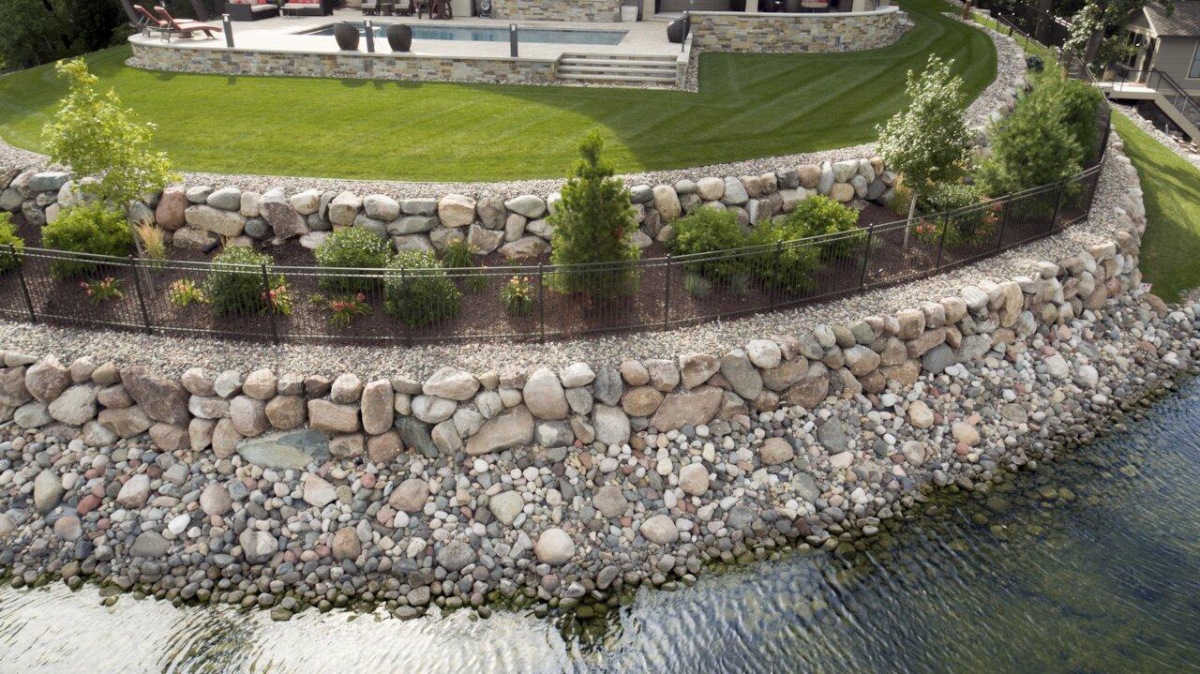
Riprap works by putting rock in the water’s path. Not a wall or rigid barrier, but a mass of large stone that sits at the water’s edge and takes the energy out of incoming waves before they reach the bank. The rocks absorb and scatter that force rather than reflecting it, which is gentler on the surrounding environment and tends to produce a more natural-looking shoreline. Vegetation can actually grow into a well-installed riprap system over time, which adds visual softness and provides additional stabilizing root structure. It’s a good fit for sites with moderate erosion, gradual slopes, and some room to work with at the water’s edge.
A seawall takes a different approach. It’s a vertical structure, a hard line between the land and the water that says the bank stops here and goes no further. Where riprap works by absorbing energy, a seawall works by holding the ground in place directly. It’s the right call when the property doesn’t have the room or the shoreline geometry for a riprap solution, when the erosion is severe enough that a softer approach wouldn’t hold up, or when the property layout needs a clean defined edge for practical or aesthetic reasons. A contractor who knows this coastline reads the site before recommending either one, because the right answer is genuinely different from one property to the next.
Riprap vs. Seawall: Quick Comparison
| Factor | Riprap System | Seawall (Vinyl or Modular Block) |
| Mechanism | Absorbs and scatters wave energy | Holds ground directly with a hard barrier |
| Best site type | Gradual slopes, moderate erosion, room at edge | Steep banks, severe erosion, tight layouts |
| Appearance | Natural, blends into shoreline | Clean, defined edge |
| Vegetation | Supports growth between stones | Limited near structure |
| Cost range | Generally lower upfront | Higher upfront, less remediation over time |
| Commercial use | Supplemental or lower-traffic sites | Standard for marinas and heavy vessel traffic |
When to Install Vinyl Seawalls or Modular Block Systems
Not all seawalls are the same thing, and that’s worth knowing before the conversation with a contractor goes very far. Vinyl seawall construction has become the go-to for a lot of residential properties along the Gulf Coast, and for good reason. Vinyl panels don’t rust, don’t corrode, and don’t suffer from the moisture-driven degradation that shortens the life of older steel or wood seawall systems. They hold their structural alignment well over time and they look clean. For a homeowner who wants a long-term solution with low ongoing maintenance and a tidy appearance at the water’s edge, vinyl construction is usually at the top of the list.
Modular block systems give you another option that combines structural reliability with a finished look that works well aesthetically in many settings. These engineered block retaining structures can step and curve in ways that poured concrete or sheet pile systems cannot, making them adaptable to shorelines that don’t run in a straight line. They sit well alongside waterfront retaining wall projects that support patios, seating areas, and outdoor living spaces near the water, giving the whole backyard setup a cohesive look rather than feeling like a collection of separate installations that ended up next to each other.
Commercial properties and working marinas tend to need something more robust. When you’re dealing with consistent vessel traffic, prop wash, and wave energy from large boats operating in close proximity to the bank, the loads on a shoreline protection system are higher than what a typical residential property experiences. Reinforced seawall construction built to commercial-grade engineering specifications handles that consistently, keeping the bank stable and protecting the dock and pier construction elements that the marina depends on.
Protecting Waterfront Investments with Long-Term Stabilization
The question of which shoreline protection solution to choose is really two questions bundled together. The first is what the site actually needs: a technical question based on soil conditions, wave exposure, bank geometry, and how much erosion is already underway. The second is what the property needs long term, which involves thinking about how the shoreline will function alongside the dock, the outdoor living areas, and the overall use of the waterfront over the years ahead. Both questions matter, and the answer to one shapes the answer to the other.
Shoreline stabilization and dock construction are more connected than people often realize going in. The pilings that hold a dock in place depend on stable soil for their embedment and lateral support. When the bank around them is eroding, those pilings gradually lose the holding capacity the dock was engineered around. Aluminum dock construction and composite dock construction systems both benefit from a stable shoreline foundation, not as a bonus but as a basic structural requirement. Designing them together from the start produces better outcomes than trying to address one after the other has already been built.
Erosion doesn’t take a waterfront in one dramatic event most of the time. It takes it slowly, in ways that are easy to defer addressing until the cost and complexity of the fix have grown considerably. Property owners who get ahead of it, who invest in the right shoreline solution before things get serious, end up with a waterfront that holds its value, functions well, and doesn’t turn into the project that swallows every other plan for the property.
Frequently Asked Questions
How do I know if my shoreline needs stabilization?
A few things give it away. Exposed tree roots along the bank mean the soil that used to cover them is gone. An undercut edge, where the bank hangs over the water a little, means wave action has been scooping out material from below. Soft spots near the water’s edge or dock pilings that have started to lean slightly can signal that the soil around them is shifting. Any one of these things by itself is worth a professional look. All of them together mean you probably want to act before the next storm season rather than after it.
Is riprap more natural-looking than a seawall?
Usually, yes. Stone blends into a coastal environment in a way that a vertical panel wall does not. On properties where the natural look of the shoreline matters and there’s room to work with, riprap often produces a result that feels like it belongs there. Vegetation can establish itself between the rocks over time, adding to that organic quality and providing additional structural support from root systems. That said, natural appearance isn’t always the deciding factor. If the bank is steep, space is limited, or the erosion severity calls for a harder barrier, a well-installed vinyl seawall can still look clean and intentional.
How long can a seawall last?
A quality vinyl seawall installed by an experienced contractor on the Gulf Coast can last several decades when maintained reasonably well. What shortens seawall life most predictably isn’t the water itself but the soil conditions behind the wall. If the backfill material was wrong or drainage wasn’t properly accounted for, hydrostatic pressure builds up over time and that’s hard on the structure. A well-engineered installation deals with those conditions upfront so the wall isn’t fighting them throughout its life.
Can shoreline protection be added after a dock is built?
Yes, and this comes up fairly often. Property owners build a dock and then notice a year or two later that the bank around it is moving in ways they didn’t expect. Adding shoreline stabilization after the fact is workable in most cases, though it requires care around the existing structure. A contractor who works with both dock construction and shoreline protection regularly knows how to design around an existing dock in a way that gives you solid erosion control without creating problems for the structure already there.
What factors influence the cost of shoreline protection?
The biggest ones are how much shoreline needs to be addressed, what system is right for the site, and how accessible the site is for equipment and material delivery. A straight run of bank on a property with good access is simpler and less expensive than a curved or irregular shoreline requiring more labor and material to follow. Material choice matters too: vinyl seawall panels, modular block systems, and riprap stone all sit at different price points. The most useful thing you can do early on is get a contractor out to walk the property and give you a real estimate based on what they actually see.