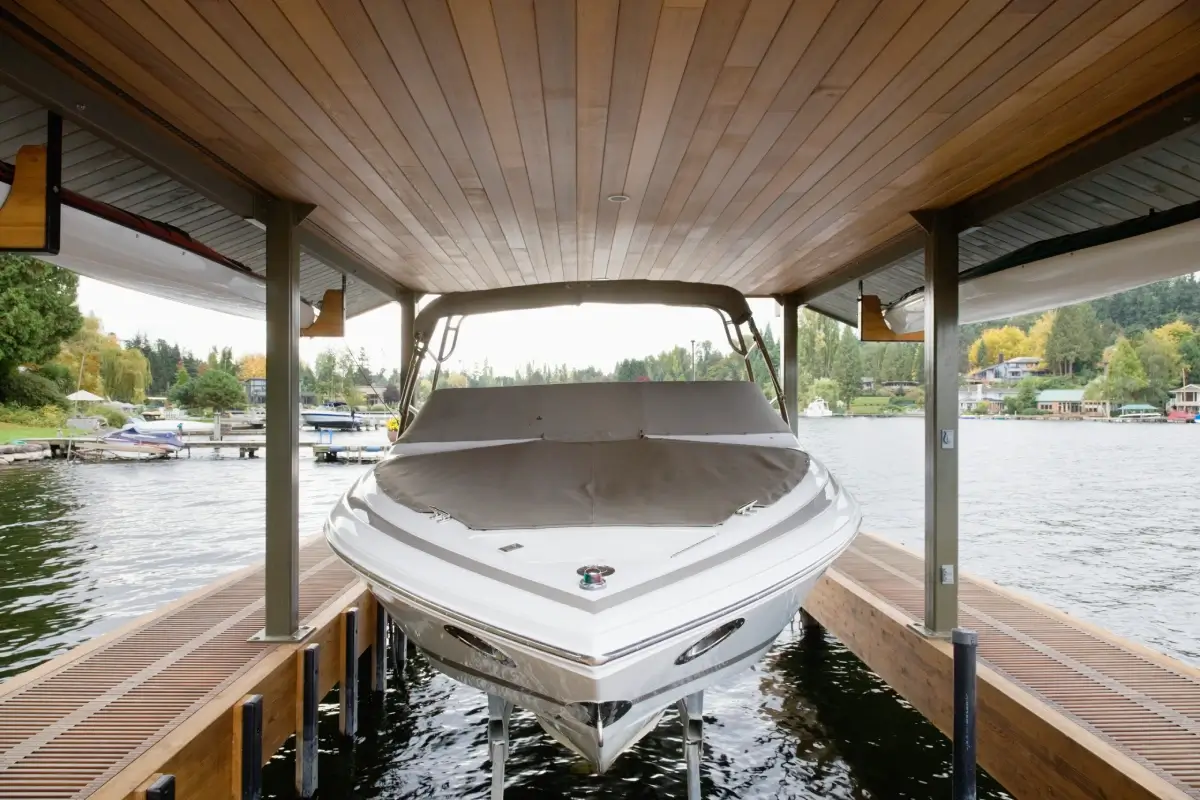
Comparing Hydraulic and High-Speed Boat Lift Technologies
A boat left in Gulf Coast saltwater between trips is slowly losing value. Hull fouling starts within days, electrolytic corrosion works without interruption, and gelcoat damage accumulates quietly until the repair bill makes it obvious. Proper boat lift installation stops most of that from happening, and this article covers the system types, installation requirements, and features that matter most for Gulf Coast owners.
Hydraulic and high-speed boat lift systems each protect a vessel differently. Hydraulic lifts raise and lower with smooth, controlled pressure that protects heavier hulls during every cycle. High-speed systems like the Sunstream Helix prioritize fast, quiet operation for owners who launch frequently. Choosing between them comes down to vessel size, use patterns, and shoreline conditions at the specific property.
Hydraulic boat lift systems have earned their reputation through consistent, reliable performance over decades of Gulf Coast use. The operation is controlled in a way that older cable-based systems can’t match: the vessel rises and descends gradually, which puts significantly less stress on the lift’s structural components and on the hull itself. For owners with larger or heavier vessels, that controlled movement isn’t just a comfort feature. It’s genuinely protective during every single cycle.
On the higher end of the market, systems like the Sunstream boat lift and the Helix boat lift have advanced the technology considerably. Precision engineering and streamlined operation are at the center of both platforms, and serious boat owners tend to notice the difference quickly once they’re using them day to day. Selecting between options comes down to vessel size, how often the boat goes in and out, and the specific shoreline conditions at the property. A knowledgeable marine contractor walks through all of those factors before making a recommendation, because what works well on one property isn’t automatically right for another.
Hydraulic vs. High-Speed Boat Lift: Quick Comparison
| Feature | Hydraulic Lift (e.g., Helix) | High-Speed Lift (e.g., Sunstream) |
|---|---|---|
| Lifting mechanism | Hydraulic fluid pressure | Electric motor with encoded drive |
| Operation speed | Gradual, controlled ascent | Fast deployment, low noise |
| Best for | Heavier or larger vessels | Frequent daily use |
| Structural footprint | Visible support structure | Compact, low-profile frame |
| Cover integration | Compatible with most covers | Designed to pair with SwiftShield |
| Maintenance | Periodic fluid and seal checks | Minimal, mostly electrical inspection |
How Proper Lift Installation Extends Vessel Life
Getting a boat out of the water between outings is the single most effective thing a Gulf Coast owner can do for the vessel’s long-term condition. Consistent boat lift installation prevents algae growth, eliminates barnacle attachment, and slows electrolytic corrosion significantly, all of which compound into real savings over the life of the boat. Most owners who make the switch say they wish they’d done it years earlier.
The way a lift integrates with the dock structure matters more than most people expect before they get into it. When lift systems are engineered alongside aluminum dock construction or composite dock construction from the beginning, the entire setup is more stable and more reliable. Framing handles load distribution as designed. Connection points stay within their expected stress range. Nothing is being asked to carry a load it wasn’t built for, and that kind of structural honesty is what separates professional marine construction from a piecemeal approach that looks fine initially but shows cracks by the second season.
In marina construction and larger waterfront developments, dependable lift performance carries even more weight. Multiple vessels coming and going on a regular schedule leave no room for unreliable equipment. Professional marine construction teams focus closely on anchoring systems, electrical components, and structural supports during installation because those are the elements that determine whether a lift performs consistently for years or starts creating headaches before the first season is out. Getting the installation right from the start costs less than correcting it later, sometimes considerably less.
Features to Look for in Modern Boat Lift and Cover Systems
Lifting the boat out of the water handles submersion damage, but UV exposure on the Gulf Coast is a separate problem that a boat lift alone doesn’t solve. A quality automatic boat cover system, particularly one designed to integrate with the lift itself, provides the additional layer of protection needed for gelcoat, upholstery, electronics, and canvas. When the two systems are selected together and work as a unit, daily use becomes easier and the protection is more complete.
An automatic boat cover that deploys and retracts quickly makes consistent use actually realistic. Manual covers work in theory, but a lot of owners stop using them regularly because the process takes too long, especially after a long day on the water. When the system works at the push of a button and secures the boat with minimal effort, that friction disappears entirely. Products like the SwiftShield boat cover are designed around exactly that idea, trading sluggish, time-consuming manual operation for genuine speed and coastal weather protection that holds up year-round.
When lift and cover systems are planned together rather than selected separately and later hoped to be compatible, the result is cleaner and more functional. The cover fits the lift properly. The operation is coordinated. Nothing looks like it was added as an afterthought. For residential dock construction projects where the finished appearance of the waterfront matters to the owner, that level of integration is visible from the first day and continues to pay off over years of use.
What matters most with boat lift installation is that planning quality and execution quality both have to be there for the system to deliver what it promises. Good equipment installed carelessly doesn’t perform as it should. Skilled professionals can coax solid results from average equipment, but only up to a point. The best outcomes consistently come from quality systems installed by a marine contractor who understands how everything fits together, both with each other and with the larger dock construction project it’s part of.
Frequently Asked Questions
1. How do I determine the correct lift capacity for my boat?
Capacity needs to exceed the total weight of the vessel fully loaded: fuel, gear, and any equipment that stays on board. That calculation matters because undersizing a lift is one of the more common and costly mistakes owners make, creating both safety risks and premature mechanical wear. A marine contractor runs through all of it during the assessment phase, before anything gets ordered.
2. Are hydraulic systems difficult to maintain?
Routine maintenance on a modern hydraulic boat lift system is mostly periodic inspection and basic servicing, not anything complex or demanding. Following the manufacturer’s schedule is what keeps things running without issue. Owners who come from older mechanical or cable-based systems usually find the hydraulic setup noticeably easier to live with over time.
3. Can lift systems be added to an existing dock?
Sometimes, yes. It depends on whether the existing structure was built to handle the additional load and whether the dock configuration works with the lift being considered. An on-site evaluation is the only reliable way to know for sure. Some older docks need structural reinforcement before a lift makes sense. Others are already in good enough shape that a new boat lift installation can proceed without modification.
4. Do boat covers operate independently from lifts?
Some automatic boat cover setups are entirely independent and compatible with a wide range of lift platforms. Others, including certain SwiftShield configurations, are designed to integrate directly with specific lift systems for coordinated operation. Buying both at the same time opens up the option of selecting systems engineered to work together, which simplifies daily use and tends to result in a cleaner finished installation.
5. What environmental factors should be considered before installation?
Water depth gets most of the attention, but tidal range, wind exposure, wave action, and bottom conditions all shape what lift design will actually perform reliably at a given location. A Gulf Coast site that looks calm most of the year can still see significant tidal swings and storm-driven chop that stress a poorly positioned system quickly. A professional marine contractor reviews all of it as part of the planning process. Skipping that step tends to show up as performance problems later.