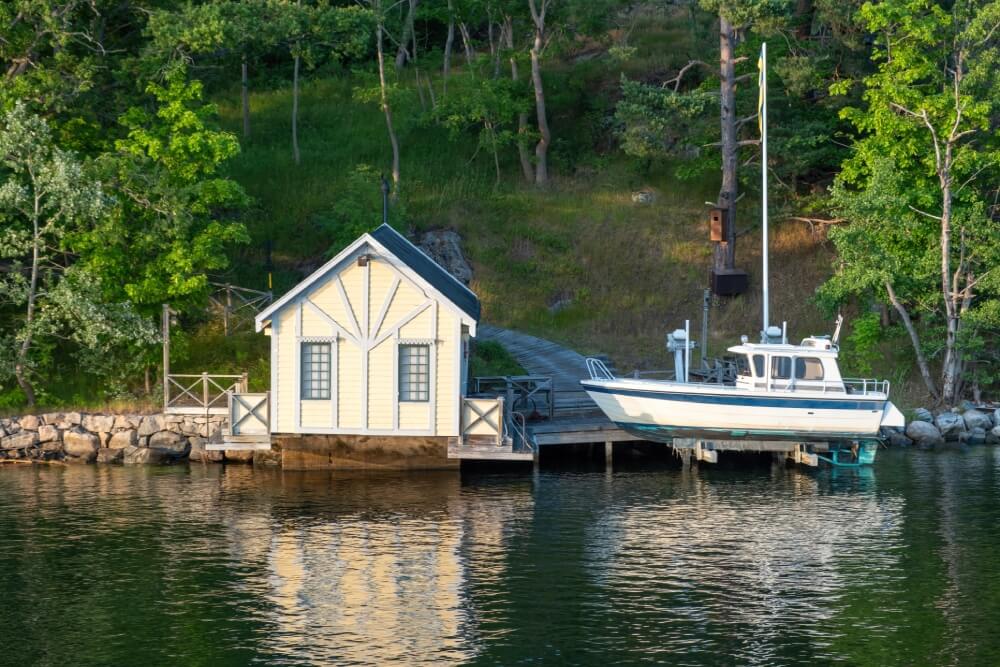
Design Considerations for Protection, Privacy, and Function
Most people start thinking about boathouse construction the same way. They want to protect the boat. That is the obvious part. But once the planning gets underway, the list of things the structure needs to do grows quickly. It has to handle Gulf Coast storms without falling apart. It needs to fit the shoreline conditions at that specific property, not some generic waterfront somewhere. It should look like it belongs there rather than like it was dropped in from a catalog. And ideally, it makes daily life on the water easier rather than adding friction. Getting all of that right at once takes more than good intentions.
Water depth at the site is the first thing a serious boathouse builder looks at. Not the average depth. The actual depth at the specific location where the structure is going, accounting for tidal swing and seasonal variation. A foot or two of difference in clearance can change the entire design. Prevailing wind direction matters too, because a boathouse that is oriented wrong catches wind like a sail and puts enormous stress on the anchoring system every time conditions kick up. These are not details that can be figured out after construction starts. They have to drive the design from day one.
Privacy is something Gulf Coast homeowners care about more than the brochures usually let on. Waterways out here get boat traffic. Neighbors are close. A boathouse positioned without thinking through sight lines ends up putting the interior of the structure, and sometimes the backyard behind it, on display to everyone passing by on the water. A good marine contractor thinks about orientation early and works it into the design so the finished structure gives the property owner the water views they want without giving up privacy they did not mean to sacrifice.
Very few boathouse construction projects happen completely in isolation. Most connect to something else on the property, whether that is an existing dock, a planned aluminum dock construction system, a composite dock construction platform, or a broader waterfront construction vision that covers the whole shoreline. When those pieces get designed together by people who understand how marine construction works, the result feels intentional and holds together structurally. When they get handled separately by different contractors who never talked to each other, the seams show and the weak points tend to be exactly where the two systems meet.
Choosing the Right Boat Lift and Cover System
Here is something worth saying plainly. A covered slip without a lift is not really protecting the boat. The roof keeps rain off. That is about it. The hull is still sitting in Gulf Coast saltwater every hour the boat is not out on the water, collecting fouling, developing corrosion on through-hulls and fittings, and slowly accumulating the kind of damage that shows up as a big repair bill or a significant drop in resale value a few years down the road. Boat lift installation is what actually gets the vessel out of that environment and keeps it out.
Tidal movement is a real design factor on the Gulf Coast that affects which lift system makes sense for a given property. A hydraulic boat lift handles changing water levels gracefully, raising and lowering the vessel with smooth, controlled movement that does not put excessive stress on the cradle or the hull. That consistency matters more the bigger and heavier the boat is. For property owners who want the most refined lifting experience available, systems like the Sunstream boat lift and the Helix boat lift represent what the technology looks like when it is engineered specifically for demanding marine environments. Low noise, high precision, built to last.
Sun damage inside a boathouse is a problem that catches people off guard the first time they own one. The structure blocks direct overhead sun for part of the day, but reflected light off the water, afternoon angles, and the general intensity of Florida UV exposure still get to the boat if it is sitting uncovered. Gelcoat dulls. Upholstery cracks. Canvas degrades faster than it should. An automatic boat cover system is the fix, and the ones worth recommending are the ones that operate fast enough that owners actually use them every single time. The SwiftShield boat cover was built around that idea. It deploys quickly, secures the vessel properly, and makes protecting the boat a ten-second task instead of a ten-minute chore. When the lift and the automatic boat cover are integrated as a single coordinated system, the whole boathouse setup works the way it was meant to.
Engineering a Boathouse to Withstand Coastal Weather
Storm season on the Gulf Coast is not a hypothetical risk that gets priced into insurance premiums and then forgotten. It is a real annual event that waterfront structures either survive or do not, depending on how they were built. A boathouse that was engineered with Gulf Coast weather in mind and one that was not do not look very different on a calm day in April. They look extremely different on a September morning after a tropical system has passed through.
Professional marine construction teams work from actual load calculations, not general construction standards borrowed from inland building codes. Wind uplift on a roof structure over open water is a specific engineering problem. So is lateral load from storm surge pushing against the sides of a building that is sitting at the waterline. Fastening systems, framing connections, and anchoring methods all get specified for those actual conditions rather than for some milder set of assumptions that do not reflect what Gulf Coast weather actually delivers.
The materials going into the framing and connections matter just as much as the engineering behind them. Corrosion-resistant components are not an upgrade category in saltwater construction. They are the starting point. Hardware that would last twenty years in a dry inland climate starts failing within a few seasons when it is sitting in salt air every day. A marine contractor who has been building in this environment long enough has seen exactly which materials hold up and which ones do not, and that experience shows up in every material specification they put into a project.
For properties that tie into marina construction or sit within larger waterfront developments, the structural standards have to be even higher because the consequences of a failure extend beyond a single property. A boathouse built to those standards does not just weather its first storm season. It weathers decades of them, and the vessel inside it stays protected the whole time. That is the whole point of doing this right.
Frequently Asked Questions
How large should a boathouse be for a single vessel?
Bigger than you think. The boat’s length, beam, and height are the starting measurements, but by the time you add lift clearance, cover deployment space, and enough room to actually maneuver in and out without holding your breath, the structure needs to be meaningfully larger than the vessel itself. A site-specific assessment by an experienced boathouse builder gives you the real numbers rather than a guess that ends up feeling cramped the first time you try to bring the boat in on a windy afternoon.
Do boathouses require special permits in Florida?
Yes, and the process is more involved than most people expect going in. Florida waterfront construction runs through local permitting, and depending on the waterway and the specific site, it can also involve state environmental review. Trying to manage that independently slows things down and sometimes leads to approvals that come back with design conditions attached. A qualified marine contractor handles permitting as a standard part of the project and knows what each reviewing agency needs to see.
What type of lift works best in tidal areas?
A hydraulic boat lift is the right answer for most tidal locations on the Gulf Coast. The smooth, controlled operation is not just a comfort feature. It is what makes the system reliable and consistent when water levels are shifting around it. Getting the capacity sizing right is just as important as the lift type. An undersized hydraulic system in a tidal area strains every time the water is low and the full weight of the boat is on the cradle. That wears out components fast.
Can lighting and storage be incorporated into the design?
Yes, and planning for them during the design phase is far easier than retrofitting them later. Overhead lighting, electrical outlets, enclosed storage for gear and tackle, and utility connections all work better when the layout was built around them from the start. Some owners add a small rigging station or workbench. Others want enough seating to make the boathouse a comfortable spot to spend time even when the boat is out on the water. Whatever the vision is, it is easier to build it in than to bolt it on.
How can a boathouse improve property value?
In several ways at once. A well-built boathouse protects a vessel that would otherwise take years off its life sitting exposed. It adds a waterfront feature that is genuinely hard to come by in today’s permitting environment, where getting approval for new waterfront construction has gotten more difficult, not less. And it tells prospective buyers something about how the property was cared for. Quality boathouse construction from a reputable marine contractor is one of the more durable investments a Gulf Coast waterfront property owner can make.